
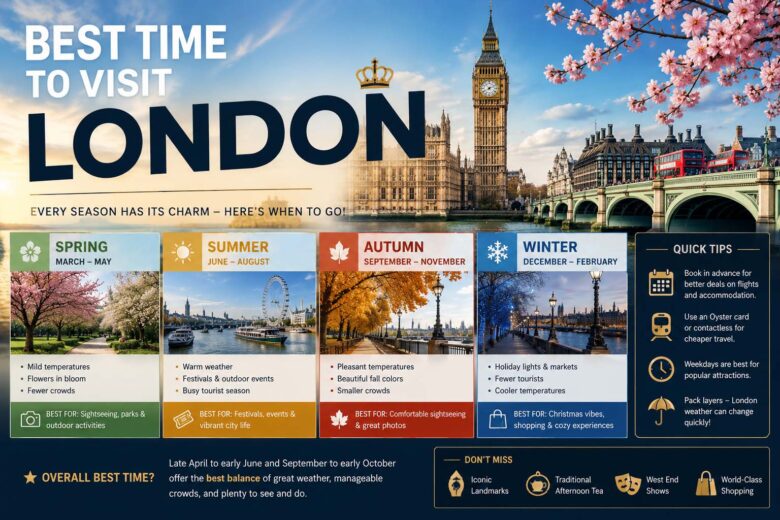
Best Time to Visit London: Complete Travel Guide for Weather, Crowds, and Budget
London is one of the world’s most iconic travel destinations. From historic landmarks and royal palaces to museums, theaters, parks, and vibrant neighborhoods, the city offers something for every traveler. Knowing the best time to visit London can help you plan the experience you want.
However, London experiences changing weather patterns throughout the year, and your travel experience can vary significantly depending on when you visit. Understanding the best time to visit London can help you enjoy better weather, avoid large crowds, and potentially save money.
Best Time to Visit London Overall
London is a year-round destination, but each season offers unique advantages and challenges.
Factors influenced by travel timing include:
- Weather conditions
- Hotel prices
- Tourist crowds
- Seasonal events
- Flight costs
- Daylight hours
Choosing the right time depends on your travel goals, whether you’re focused on sightseeing, budget travel, photography, or cultural experiences.
Best Time to Visit London Overall
These months typically offer:
- Mild temperatures
- Longer daylight hours
- Outdoor events
- Blooming parks and gardens
- Comfortable sightseeing conditions
Summer brings the warmest weather, while late spring and early autumn often provide a balance of pleasant temperatures and manageable crowds.
When Is the Best Time to Visit London?
Many travelers ask, when is the best time to visit London?
The answer depends on what type of trip you’re planning.
For Sightseeing
Best months:
- May
- June
- September
These months generally offer comfortable weather and fewer crowds than peak summer.
For Festivals and Events
Best months:
- June
- July
- August
London hosts numerous outdoor events, concerts, and cultural festivals during summer.
For Budget Travelers
Best months:
- January
- February
- November
Lower demand often means more affordable accommodations and flights.
Best Time of Year to Visit London
The best time of year to visit London is often considered late spring and early summer.
Why May and June Are Popular
Benefits include:
- Pleasant temperatures
- Longer days
- Colorful gardens
- Outdoor dining opportunities
- Moderate crowd levels
Visitors can enjoy iconic attractions such as:
- Buckingham Palace
- Tower of London
- Westminster Abbey
- Hyde Park
without facing the largest summer crowds.
London Weather and Climate
London has a temperate maritime climate, and travelers comparing regional conditions may also research the best time to visit scotland.
This means:
- Mild summers
- Cool winters
- Rainfall throughout the year
Unlike some destinations, London rarely experiences extreme temperatures.
Average Seasonal Temperatures
| Season | Average Temperature |
|---|---|
| Spring | 8°C–17°C |
| Summer | 15°C–25°C |
| Autumn | 10°C–18°C |
| Winter | 2°C–8°C |
Rain is possible during any month, making a light waterproof jacket a smart travel companion.
Seasonal Breakdown
Spring (March to May)
Pros:
- Blooming flowers
- Comfortable temperatures
- Longer daylight hours
- Fewer tourists than summer
Cons:
- Occasional rain showers
- Variable temperatures
Parks such as Hyde Park and Kensington Gardens are particularly attractive during spring.
Summer (June to August)
Summer is the busiest tourism season.
Pros:
- Warmest weather
- Outdoor festivals
- Extended daylight
- Vibrant atmosphere
Cons:
- Higher hotel prices
- Larger crowds
- Busy attractions
Despite the crowds, many visitors consider summer ideal for exploring London on foot.
Autumn (September to November)
Autumn offers a quieter travel experience.
Pros:
- Fewer tourists
- Pleasant temperatures
- Beautiful fall colors
- Better accommodation availability
Cons:
- Increasing rainfall
- Shorter days
September is especially popular because summer-like weather often continues, while travelers planning another nearby trip may also research the best time to visit ireland.
Winter (December to February)
Winter transforms London into a festive destination.
Pros:
- Christmas markets
- Holiday decorations
- Lower travel costs after New Year
- Fewer tourists in January
Cons:
- Cold temperatures
- Limited daylight
- More indoor sightseeing
Winter can be an excellent choice for budget-conscious travelers.
Monthly Travel Breakdown
January–February
Best for:
- Budget travel
- Museum visits
- Lower hotel prices
Weather:
- Cold
- Occasional rain
March–April
Best for:
- Spring flowers
- Outdoor walks
- Moderate crowds
Weather:
- Cool but improving
May–June
Best for:
- Sightseeing
- Outdoor activities
- Photography
Weather:
- Mild and pleasant
July–August
Best for:
- Summer events
- Festivals
- Family vacations
Weather:
- Warmest months
September–October
Best for:
- Comfortable weather
- Smaller crowds
Weather:
- Mild temperatures
November–December
Best for:
- Holiday atmosphere
- Christmas shopping
Weather:
- Cool and often rainy
Cheapest Time to Visit London
Travelers looking to save money should consider:
January
Often the least expensive month after holiday travel ends.
February
Hotel rates frequently remain lower than average.
November
Offers reasonable pricing before the Christmas season begins.
Budget travelers can often find:
- Lower hotel rates
- Flight discounts
- Reduced attraction crowds
The trade-off is cooler weather and shorter days.
Best Time to Visit London and Paris
Many travelers combine the United Kingdom and France in one trip and compare the best time to visit paris as part of the same itinerary.
The best time to visit London and Paris is generally:
May to June
Advantages:
- Pleasant weather in both cities
- Comfortable walking conditions
- Beautiful parks and gardens
- Moderate tourist crowds
September
Another excellent option due to:
- Mild temperatures
- Lower accommodation costs
- Reduced peak-season congestion
These months allow travelers to enjoy both destinations comfortably.
Best Time to Visit London England for First-Time Visitors
If you’re planning your first trip, the best time to visit London England is usually May, June, or September.
These months provide:
- Good weather
- Manageable crowds
- Long sightseeing days
- Pleasant outdoor conditions
First-time visitors can comfortably explore:
- Big Ben
- The British Museum
- Covent Garden
- St. Paul’s Cathedral
- The London Eye
without extreme weather challenges.
Things to Avoid When Visiting London
Underestimating Rain
Rain can occur at any time.
Always carry:
- Compact umbrella
- Waterproof jacket
Traveling Without Reservations
Popular attractions often require advance booking.
Visiting Only During Peak Summer
While summer is enjoyable, it can be crowded and expensive.
Ignoring Public Transportation
The London Underground is often the fastest way to travel around the city.
London Travel Tips
Purchase an Oyster Card
This can help reduce transportation costs.
Book Popular Attractions Early
Advance reservations can save time and money.
Wear Comfortable Shoes
Many visitors spend hours walking through the city.
Explore Beyond Central London
Areas such as Greenwich, Richmond, and Notting Hill offer unique experiences. Travelers continuing into continental Europe may also ask is brussels worth visiting.
Check Seasonal Events
London hosts festivals, sporting events, and cultural celebrations year-round.
FAQ
What is the best time to visit London?
For most travelers, May through September offers the most pleasant weather and sightseeing conditions.
January is often the most affordable month for flights and accommodations.
When is the best time to visit London for good weather?
June, July, and August generally provide the warmest temperatures.
Is London worth visiting in winter?
Yes. Winter offers festive holiday events, fewer crowds, and lower travel costs after New Year.
What is the best time to visit London and Paris together?
May, June, and September are ideal for visiting both cities.
Does London get very hot?
Not usually. Summer temperatures are generally comfortable compared to many other major cities.
Conclusion
Choosing the best time to visit London depends on your priorities, budget, and travel style. For pleasant weather and outdoor exploration, late spring through early autumn remains the most popular period. Travelers seeking lower costs may prefer winter months, while those wanting a balance of good weather and fewer crowds should consider May, June, or September.